A lighting plan helps you determine lighting that works best for you
Use our 15 minute step-by-step lighting plan guide and get valuable tips from lighting designers
Let’s get started!Easy lighting plan guide

Create your own lighting plan




- A pen or pencil
- A tape measure for measuring your room and furniture
- and a ruler to draw straight and accurate lines
- Some paper, preferably graph paper for drawing to scale.
No graph paper? Download and print our PDF template below.



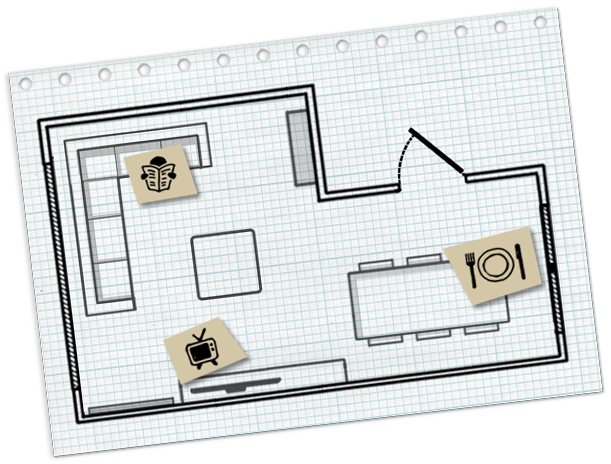
- Measure your space, then rescale and draw it onto the graph paper
- Next, mark any immovable objects such as chimneys and windows
- Finally, draw in your furniture

What will you use this space for?
To determine your ambient and task lighting, think of all the possible uses this space offers. Keep in mind that some rooms have multiple functions, even at different times of the day.
Which areas do you want to highlight?
To establish your accent or spot lighting, mark any architectural or decorative features that you may want to display.
Who will use this space?
Consider all of the users of this space to help define your lighting needs – for example, a child has different needs than friends visiting for dinner.


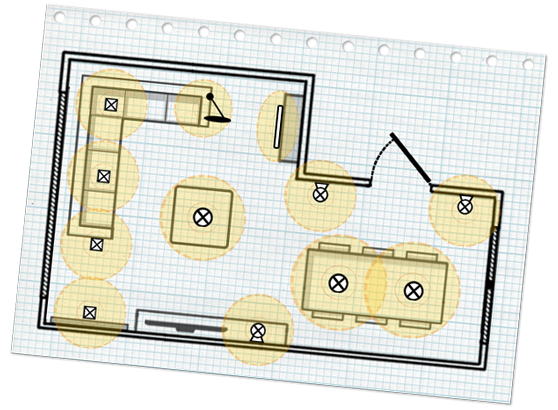
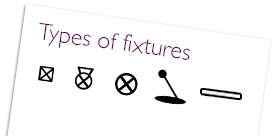
Now that you’ve set-up your floor plan, you can choose locations for each light source. Draw ‘light circles’ in areas that you would like to illuminate, avoiding too many overlapping and dark zones. The following diagram icons also help you select and organize the type of fixtures you would like to use.

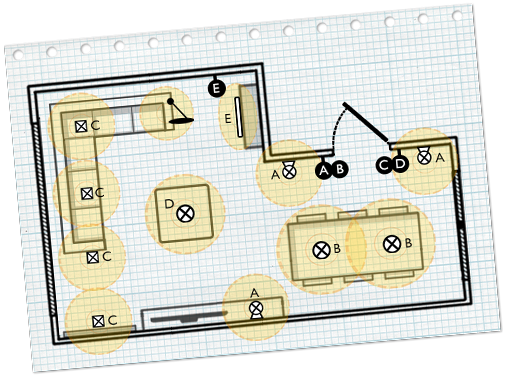
Mark light switches in convenient locations on your floor plan and remember to pair them up with corresponding fixtures. To vary the brightness of your lighting, consider using dimmer switches.

Nicely done! Your lighting plan is complete! Using the floor plan with its marked fixtures, you can now create a shopping list and look for options in our catalog.
Buy now

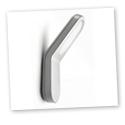 Wall mounted
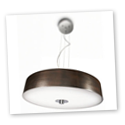 Ceiling mounted
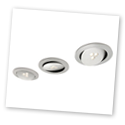 Recessed spot
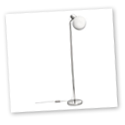 Free standing

Understanding different lighting types
Well-designed lighting can transform the look and feel of your space – once you’ve determined the kind of lighting you need, you can choose light fixtures that make your space inviting and functional.
View catalogue
Ambient Lighting,
like general illumination, evenly lights the whole room.
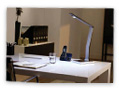
Task Lighting,
like desk lamps, makes specific actions easier in a room.
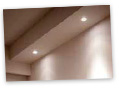
Accent Lighting,
like recessed lights, highlights décor.
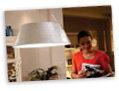
Decorative Lighting,
like pendants, makes a room feel smaller and cozier.
Scale drawing
Draw at the optimal scale of 1:50 so that every 1cm/inch of your floor plan represents 50cm/inch of the actual space.
What is the best light for reading on the sofa?
Directional light, such as a focused spotlight or lights with a flexible arm, will put the focus on your book.
 View catalogue
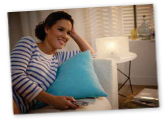
What is the best light for watching TV?
Moderate ambient lighting is best for watching TV and can be created with table lamps behind or next to the TV. If the lighting is too dark, the high contrast may cause eye strain, whereas lighting that is too bright can wash out the TV screen, making it difficult to watch.
 View catalogue
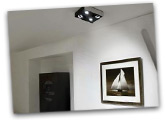
What is the best way to light up a painting?
It’s best to light a painting or a photograph from the ceiling with a directional spotlight. LEDs are best for this as they do not emit harmful UV rays that can degrade materials or fade paints and dyes.
 View catalogue
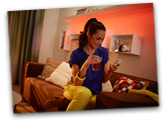
What’s the best way to throw light on my bookshelves?
There are two good ways to light a bookshelf: either from the ceiling with directional spotlights or LED light strips under each shelf would be an ideal solution.
 View catalogue
What is the best way to light the dining table?
Suspension lights with a shade, which give up- and even down-light, are ideal for kitchen and dining tables. Suspend the light 80-90cm above the table to create a cozy, intimate pool of light that will draw people together. And if your light source is dimmable, utilize a dimmer-switch so you can adjust the light for different moods and effects.
 View catalogue
How to adjust the light above the dining table so the kids can study there?
The simplest solution is to fix a good light above the table. Make sure to choose one with a high light output and a dimmer. That way you can turn the light of your suspension lamp up when there's work to be done and soften the light when you need a more relaxing dining atmosphere. Add enough general background light to minimize sharp contrast, which makes you tired quickly.
 View catalogue
Consider the distances between the light source and your objects.
Always consider the distances between the light source and your objects. Not sure how much is too much or too little? Just follow these general guidelines:
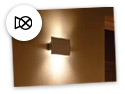
Wall lights
Should be spaced at least 20 cm apart at a height of 180 – 190 cm from the floor, depending on ceiling height
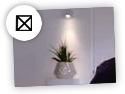
Recessed spots
(illuminating the wall or an object)
Recessed lighting located in the ceiling at a distance of least 60 cm from the wall
Recessed spotlight
(wall washing with a wide angle beam of 38 degrees or more)
Recessed lighting located at a maximum of 20 cm from the wall
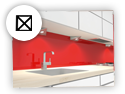
Built-in spotlight
(direct downlight, for instance above a kitchen counter)
Centered above the counter (approximately 35 cm from the wall)

Built-in spotlight
(ambient light)
For a general degree light beam (for instance 24 or 36° angle beam), the distance between the spots should be 1 meter.
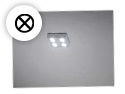
Ceiling light for general illumination
Centered in the room on the ceiling
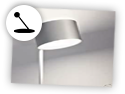
Floor/tablelamp with up and downlight
In the corners of a room

Floor or table lamp
(reading light)
Close to a couch or at the side of a bed
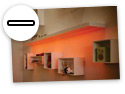
Mood lighting
Can be placed according to your personal taste - for instance under a shelf, behind a cabinet or TV, or as a wallwasher in a corner of the room.
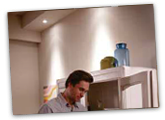
How can I light my living room to make it look bigger?
Light up the walls and you will maximize the space in your room at night. This is best done with lights placed in the ceiling along the wall pointing downwards and “wallwashers” like recessed spots.
 View catalogue
How can lighting make the living room more romantic?
With Philips LivingColors you can add a hint of soothing mauve to a dim white light to make rooms more romantic. If you want to take things a step further you can try Philips LED candles. They mimic the flickering of real candles and add a feeling of romance.
See how you can create special moments with light:
Types of fixtures
Use these clever diagram icons to specify which type of fixture should be used in each zone:
Wall mounted
Provide ambient or accent light
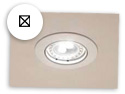
Recessed
Highlight objects and wash the walls with light for ambiance
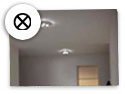
Ceiling mounted
Produce general light and contribute to the overall ambiance of your home
Light strips
Bring attention to your favorite objects
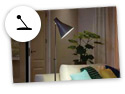
Free-standing
Have a decorative effect and help with tasks such as reading
Use dimmers and mood lights to make the room more cheerful
Try to integrate flexibility into your lighting scheme with dimmable bulbs and add mood lights to your rooms. This enables you to adjust the light level and atmosphere to suit every occasion. The dimming and color changing features can help add to the overall experience.
See how to find the right bulb for dimming via a dimmer switch.
Discuss your lighting plan
Don’t forget to discuss your lighting plan with your electrician for feasibility and proper installation; he may also have valuable tips for you when finalizing your lighting plan.
Be aware of the light source in the fixture
Different bulbs are used to create different light effects – a large variety of bulbs that affect color temperature, technology and light output are readily available. When you are considering a replacement for your traditional bulb, consult the bulb finder first and check our handy guides.
See how your bulb can influence the light effect.
Pairing switches
To pair all of your switches to their corresponding light sources, mark your first switch A and then mark all fixtures you want that switch to operate with an A also. Continue marking the remaining light sources to their functioning switch using alphabetical order, until all lights have an assigned switch.
Home Lighting Designer
Check our online Home Lighting Designer to see how different fixtures affect your space.